Diósgyőr Steelworks (DAM)

The Future of DAM

Industrial heritage, new potential

Miskolc’s industrial heritage and one of its largest redevelopment opportunities

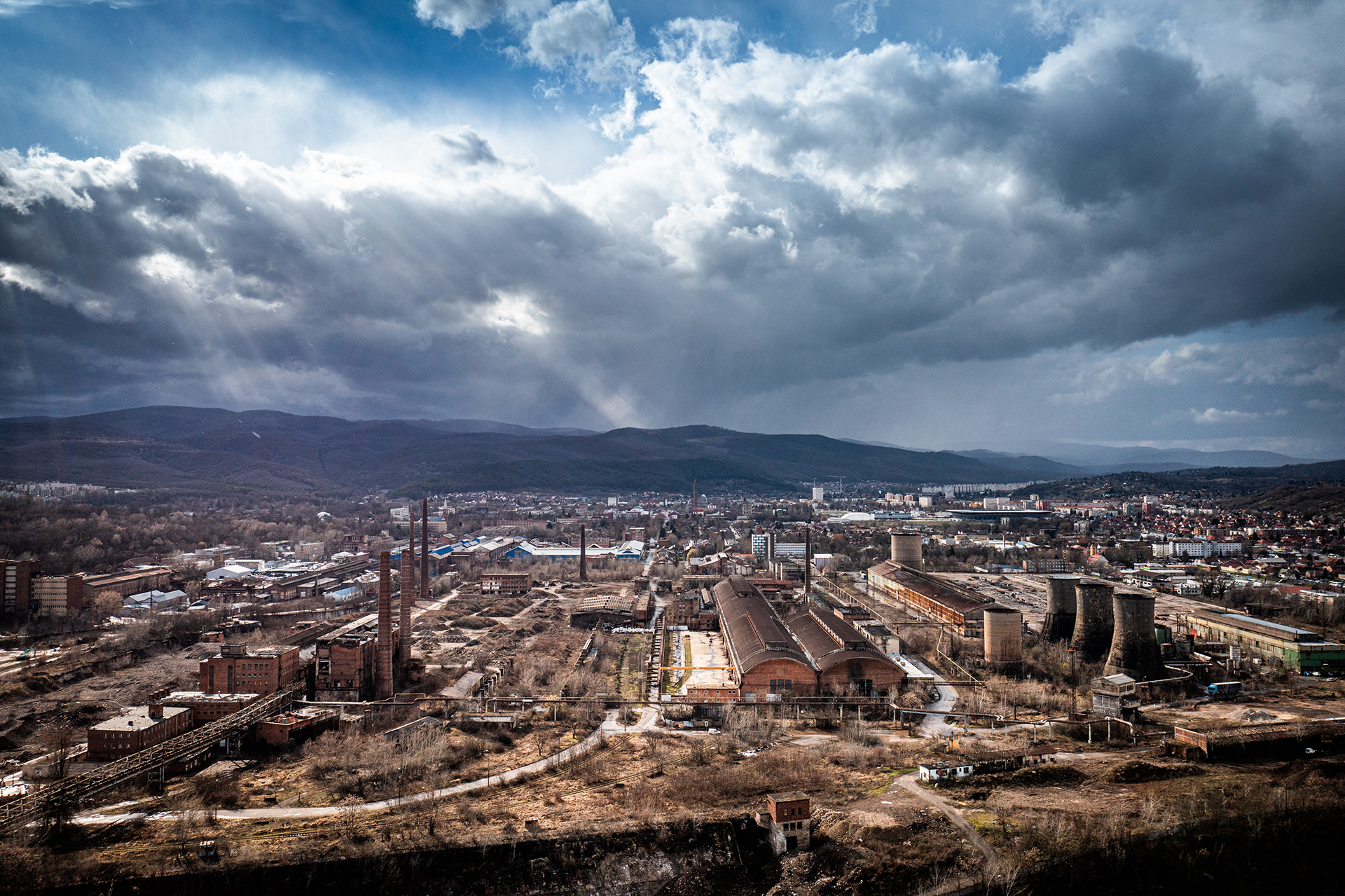
The Diósgyőr Steelworks, widely known in Miskolc as DAM, is one of the city’s most important historic, industrial and economic sites. Entire neighbourhoods, jobs, communities and a distinct sense of local identity were built around these steelworks.

Today, the former industrial site, covering almost 130 hectares, represents an important part of the city’s industrial heritage, a major urban regeneration challenge and a substantial reserve of economic potential. Given its size and location, the future of DAM is a key consideration for Miskolc’s long-term development.

By means of incremental urban planning, it is the objective of the city leadership to create the conditions for a modern, mixed-use industrial and urban district to emerge over time. Alongside modern industrial and technology-related investments, the area could accommodate retail, services, culture, sport, recreation and community facilities in the future.

As of today, the DAM site continues to raise complex legal, environmental and infrastructure issues. In recent years, however, one fundamental change has taken place: Miskolc has become the majority owner of the site and can now play an active role in shaping its future.

≈130 hectares

The approximate area of the former industrial site.

56% municipal ownership

More than 73 hectares of the site are now owned by the municipality.

41 businesses

Operating on the site when the regeneration study was completed.

≈650 employees

Working for businesses on the site at the time of the study.

Objectives and long-term vision

A district shaped by connected uses

DAM’s future could be built around a combination of various uses and functions. Current plans examine options for development; the decisions on the final mix of uses and land allocation could be based on further technical, economic and environmental assessments.

01 · Economy

Room for industrial and technology investment

The options under consideration focus primarily on industrial and technology investments suited to the site’s location, with near-zero pollutant emissions and limited logistics requirements.

  • One regeneration scenario envisages a contiguous industrial development area of more than 30 hectares in the southern part of DAM, suitable for larger-scale, land-intensive investments.
  • Another identifies a 14.5-hectare industrial area in the north, with direct road access and a restorable rail connection.

02 · Urban life

Reconnect the site with the city

Alongside economic activity, there is a compelling case for introducing urban and community uses to the site, facilitating its reintegration into the Miskolc city fabric.

Future development could include retail and services, cultural, sports and leisure facilities, public and community spaces.

03 · Green space

Make space for nature and movement

Green areas, green corridors, recreational space, and pedestrian and cycle connections could all play an important role in the long-term vision.

The study also examines new routes through DAM that could connect surrounding neighbourhoods, gradually integrating this formerly isolated industrial site into the urban fabric.

04 · Infrastructure

Prepare the networks for future use

Suitable infrastructure will be essential to any future development. The internal road network and access routes need upgrading, while public utilities, electrical capacity, water and wastewater systems, stormwater management and energy supply all require careful reconsideration.

Improved rail links, public transport, and pedestrian and cycling infrastructure could also form part of the long-term concept.

The energy options include renewable generation. The regeneration study considers a solar installation covering around 10 hectares of commercially less attractive or more heavily contaminated land, with an estimated peak capacity of approximately 15 MW.

Background

A long-standing challenge, now with a new opportunity

The future of DAM has been on Miskolc’s agenda for decades. This extensive, partly neglected site, with environmental liabilities and a complicated ownership structure, has long presented a major challenge for the city’s urban development.

Previously, the city did not hold a substantial ownership interest in DAM and could therefore exercise only limited influence over its future. At the same time, the supply of development-ready land in Miskolc’s existing industrial parks has gradually diminished, while DAM offers significant investment potential over the longer term.

A comprehensive regeneration study of this site was completed in 2024. It examined the site’s historical and urban significance, potential economic uses, ownership and legal status, environmental condition, transport and utility connections, energy opportunities, and the financial and technical requirements for redevelopment.

The study outlined the potential for a modern, mixed-use district bringing industry and urban functions together. In addition to advanced industry and technology, it envisaged possible uses in services, retail, research and development, the creative industries, culture, sport and community activities.

Accordingly, Miskolc’s Economic Programme for 2025–2029 identified the regeneration of DAM as a priority.
A turning point

Municipal ownership gives the city an active role

In 2025, one of the site’s major owners offered its ownership interest for sale as part of a voluntary liquidation. This gave Miskolc its first opportunity to acquire a significant stake in DAM. With support from the Hungarian Government, the municipality initially acquired an ownership interest of approximately 30%, before purchasing additional interests in 2026.

Miskolc now holds an ownership interest in DAM of 56% in total, equivalent to more than 73 hectares of the site. The municipal portfolio also includes a substantial part of the internal road network, together with numerous office buildings, industrial halls and other properties.

Across the two acquisition phases, the city obtained assets valued at approximately HUF 7.1 billion. In addition, HUF 823.5 million of the government funding allocated to the acquisitions is available until the end of 2027 for tasks arising in relation to site operation and the resolution of ownership issues.

DAM today

An active economic area with complex needs

The site still represents a complex issue. Parts of DAM are in poor order, several buildings are in a deteriorated condition, the internal roads require refurbishment, and significant amounts of illegally dumped waste are present across the site.

Nonetheless, DAM remains an active economic area. Upon completion of the regeneration study, 41 businesses were carrying out substantial manufacturing or service activities on the site, employing around 650 people. Their combined annual turnover amounted to approximately HUF 25 to 26 billion, generated largely by the metalworking and mechanical engineering sectors.

This established business community, industrial expertise and economic activity could provide an important foundation for future development.

Property portfolio

A varied base of industrial assets

The portfolio acquired by the Municipality of Miskolc (City of County Status) comprises 41 separately identified buildings, structures and groups of structures, with a combined adjusted area of 57,351 m².

It includes offices and staff amenities, large industrial halls, warehouses, and buildings housing technological, mechanical and other industrial operations.

  • 18 railway tracks across industrial sidings and the associated marshalling yard.
  • Two industrial halls, each approximately 10,000 m²; one is in good condition and the other in fair condition.
  • The better-maintained hall has direct rail access and operational overhead travelling cranes with a lifting capacity of 10 tonnes.
  • An electricity network substation is located within one kilometre. Subject to available grid capacity, it could potentially provide up to 200 MW for future investment projects on the site.

Conditions for regeneration

Understanding the site before shaping its next use

Complex ownership arrangements

DAM is held in undivided joint ownership by approximately 140 owners, including both businesses and private individuals.

The land registry is not always up to date as to the actual use of the site and its buildings, and there is no comprehensive written agreement governing the use of the jointly owned property. Clarifying land use and ownership arrangements is therefore one of the indispensable prerequisites for regeneration.

Environmental conditions

Given DAM’s heavy industrial past, soil contamination is detectable in samples from multiple locations. Earlier investigations found low levels of heavy-metal contamination across much of the site as a result of slag infill, together with more concentrated contamination in certain smaller areas. Some tests also detected polycyclic aromatic hydrocarbon (PAH) contamination.

The measurements available to date have not established that contaminants have migrated into groundwater or surface waters. Further investigation, targeted treatment of affected areas and the careful matching of future uses to the site’s environmental characteristics will all be important conditions for redevelopment.

What is the city doing?

Preparing the site for future development

The regeneration of DAM is a long-term undertaking. The main priority at this stage is to put the site in order, make its ownership and use more transparent, and prepare it for future development.

As majority owner, the city is coordinating the resolution of ownership and legal issues, technical preparation, consultation with businesses operating on the site and other co-owners, and the identification of potential government, municipal, private and EU funding.

Site security and clearance

Protecting and preparing the area

The termination of prior security arrangements has entailed repeated occurrences of illegal waste dumping and the unlawful removal of materials and equipment.

Miskolc therefore introduced organised site security as of 1 April 2026. The system includes perimeter protection, patrols and CCTV surveillance.

Technical assessments and cost estimates are also under way for refurbishing the internal road network, clearing overgrown vegetation, preparing the land and removing illegally dumped waste.

Ownership arrangements and land survey

Building a clearer picture of the site

The municipality has commissioned a digital base map and geodetic survey covering the entire DAM site. Due by the end of 2026, it will establish accurate site boundaries and record the locations and dimensions of buildings, providing a basis for future land subdivision and reconfiguration.

At the same time, preparations are under way for a land-use agreement, alongside discussions with major co-owners.

The long-term objective is to establish individually manageable parcels under the municipality’s sole ownership that can be made suitable for specific development and investment projects.

Next steps

A long-term project with a stronger starting point

Miskolc now has an ownership position that allows it to take an active role in shaping DAM’s future.

Over the coming years, the priorities will be to resolve ownership and land-use arrangements, carry out technical and environmental site preparation, plan infrastructure upgrades, and prepare specific investment opportunities that could bring new economic and urban uses to the former steelworks in the longer term.

The objective is a renewed district that draws on Miskolc’s industrial heritage and existing economic expertise, while creating new opportunities for the city’s economic development and the regeneration of surrounding neighbourhoods.